CLICK FOR THE
Newest Tale…
What’s New This Week:
-
SMALL DESCRIPTION
-
an exploration into the alternative options, for panoramic frames shot on film, when xpan isn't an option.
-
Description text goes here
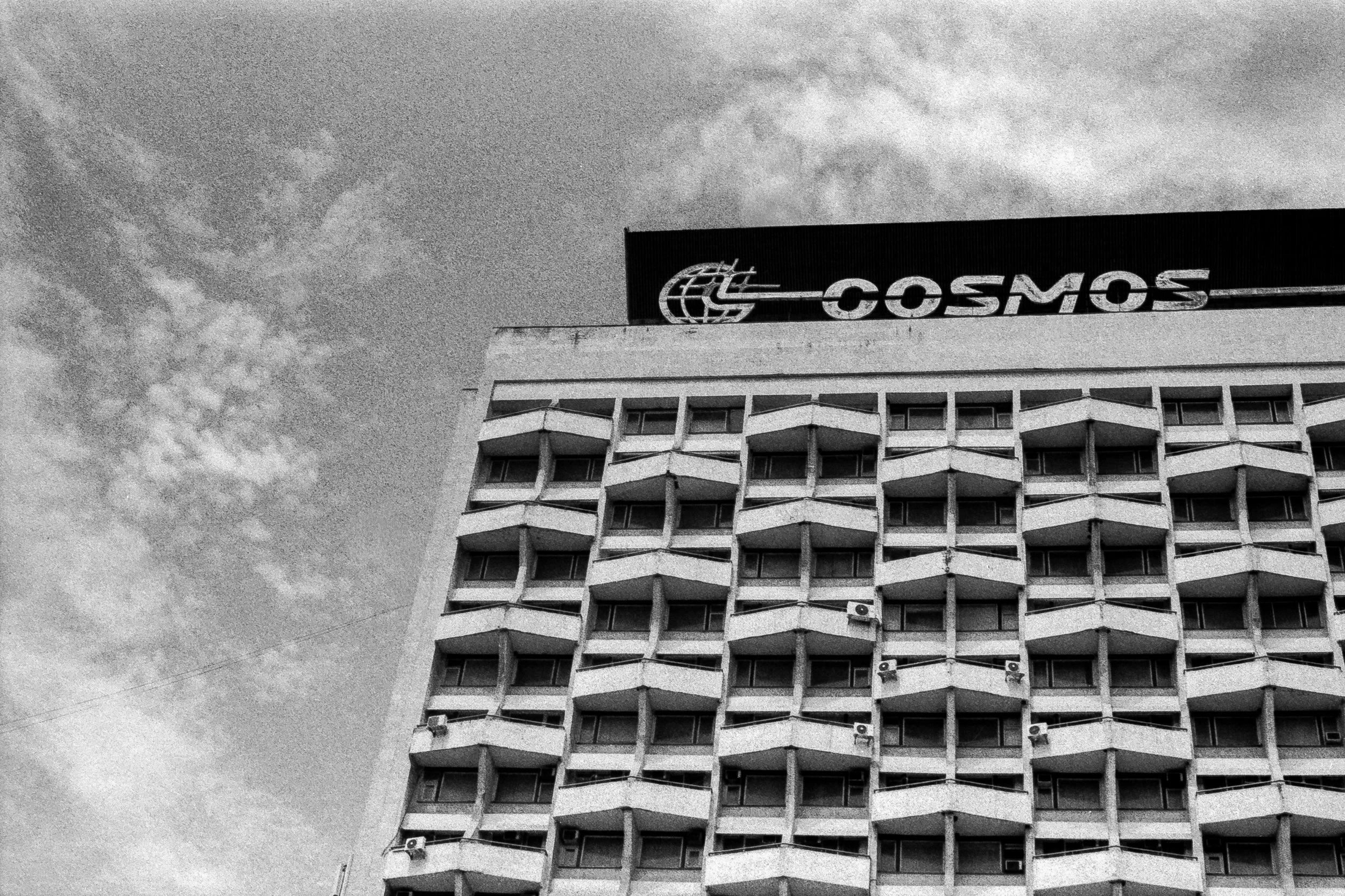
Fall From Orbit: COSMOS HOTEL
It all begins with an idea.
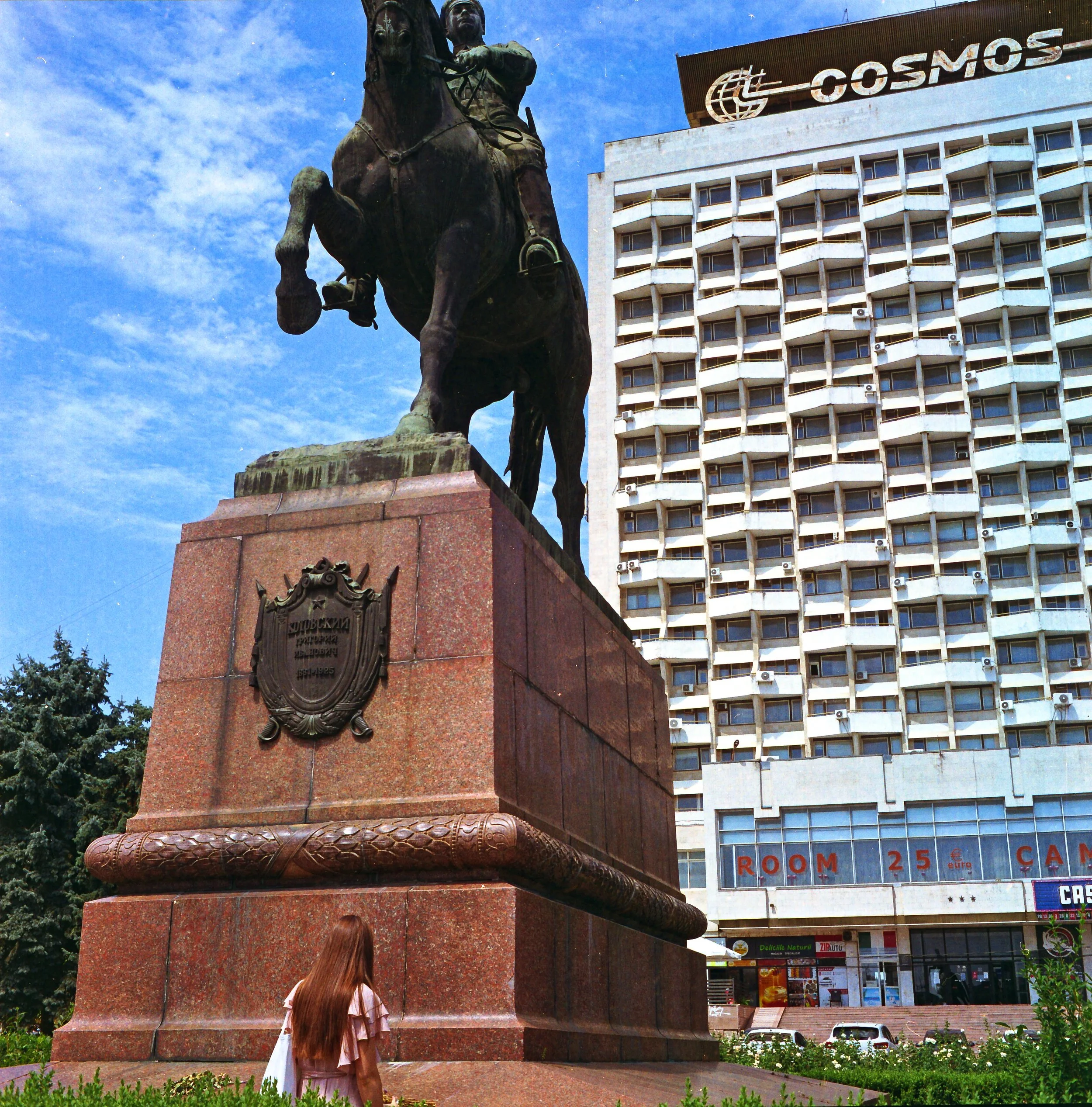
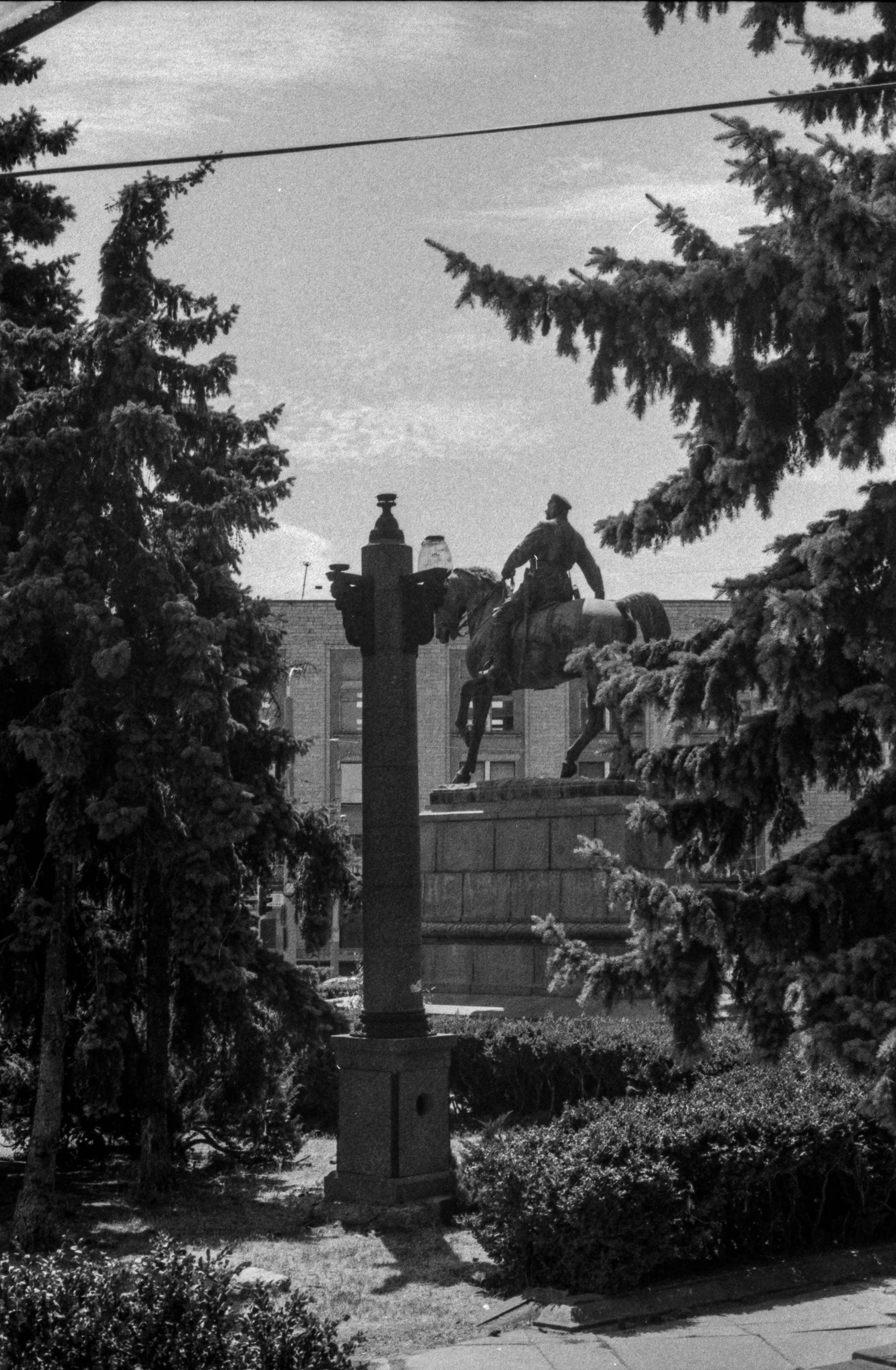
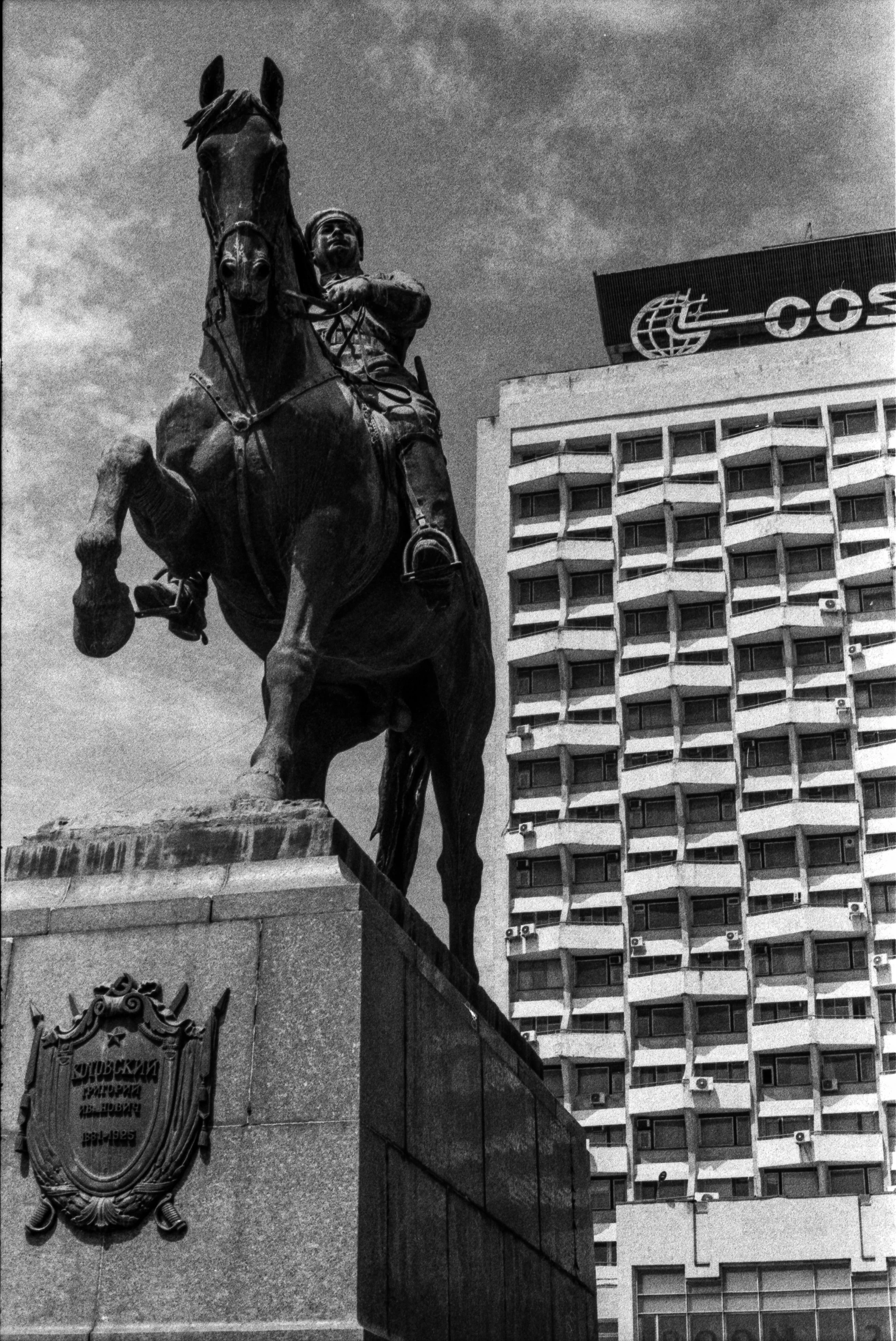
Rolleiflex T2 | Statue of Grigory Ivanovich Kotovski (1881–1925) in front of the Hotel COSMOS.
“The impossible of today, will become the possible of tomorrow”- attributed to K. E. Tsiolkovsky, a Soviet physicist who mathematically discovered how a rocket can reach sufficient velocity to escape Earth. Escape indeed, but what happens when it all comes crashing down? What are we left with? Is it a disintegrated rocket, or does it resemble the Cosmos itself, falling from orbit?
The bold dream of reaching new frontiers in space comes to a halt amid the concrete extravagance of the hotel ‘Cosmos’, which longs for survival as it nears collapse.
Construction lasted from 1974 to 1983, amounting to a whopping eight years. This figure is partly responsible for the tons of reinforced concrete used in the hotel's construction. This feat of architecture was verified by the lonely worker at the former reception at the Cosmos. Svetlana, deep in thought, meddles with something at her reception desk. Upon entering, a sign outside the door reads “Cosmos Hotel is not working.”
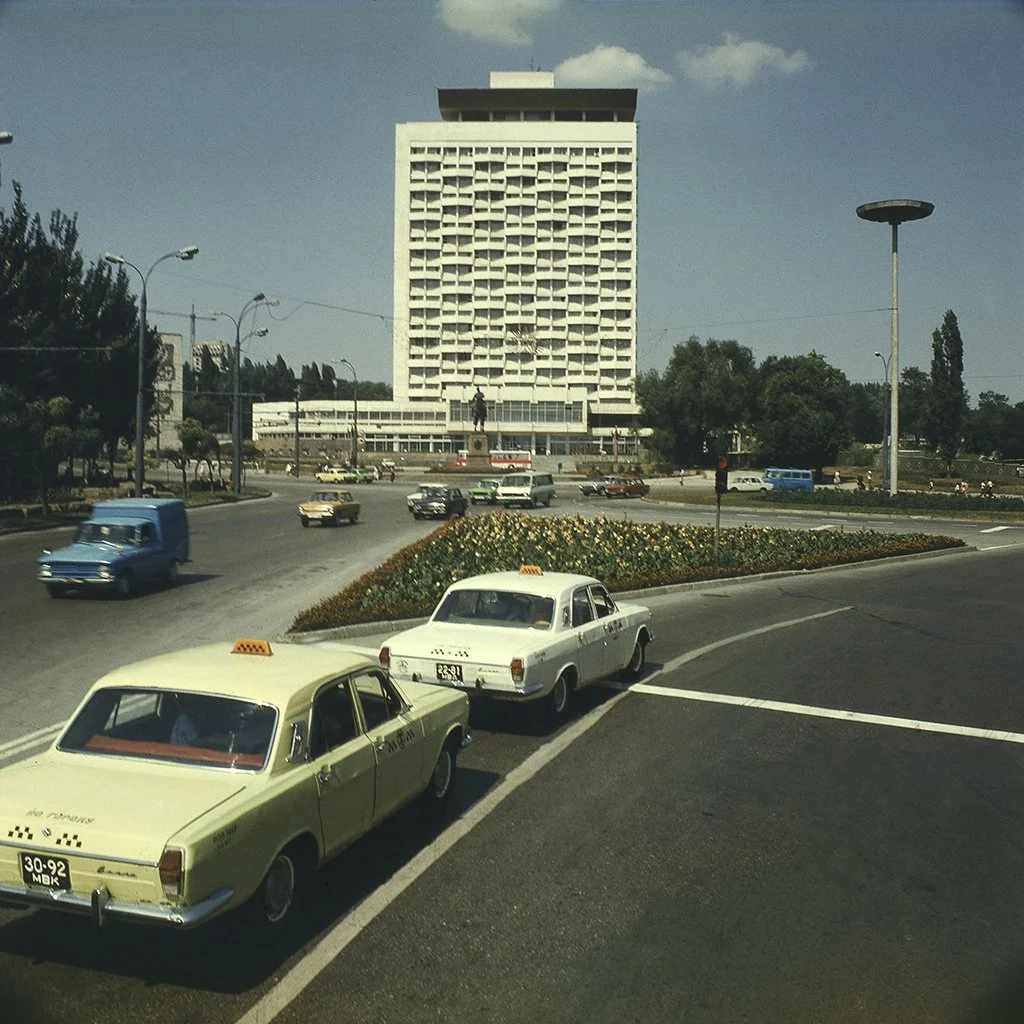
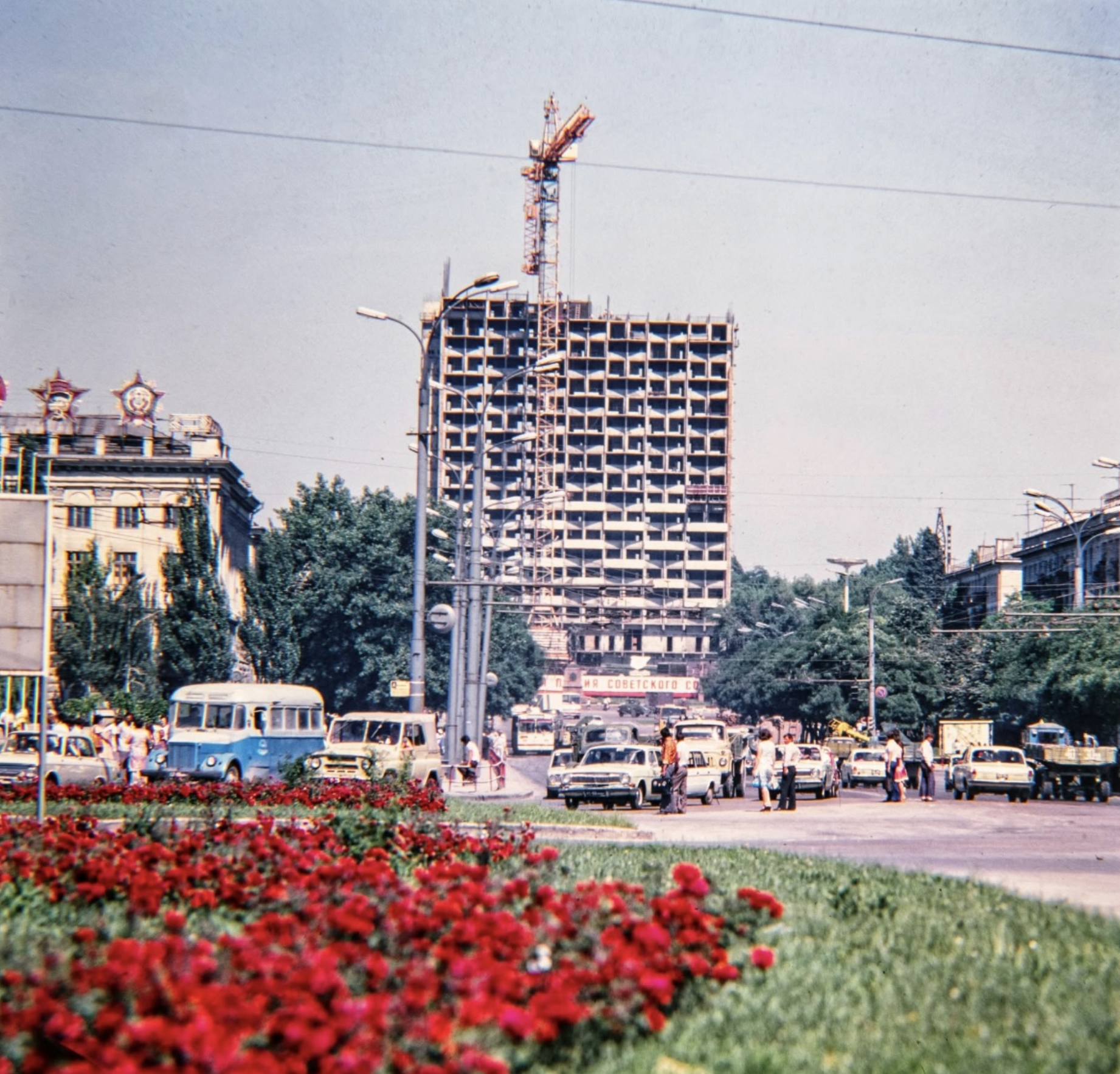
Sourced from: Oldchisinau.com
Darkness invades the reception; only the beam of light shines in the hallway, shining on the disused elevators. Once inside, the temperature suddenly drops, thanks to the abundance of concrete; there is no need for air conditioning. To the left of the hallway, the former grand reception room has been turned into a storage room for off-road bikes. The clocks marking the different time zones from around the world have been removed, and only the text “MOSCOW”, “NEW YORK” … remains. Within the lobby, new businesses have sprung up, keeping the Cosmos economically afloat and the door open. One of these businesses is a tattoo parlor. The place is nearly deserted. A man sits alone on the old cushioned seats by the elevator, scrolling through his phone. The place echoes as dust rises in the streak of light.
Approaching the lady behind the counter of the reception, seeming to be the last of her kind, a Cosmos employee. Fearing that I might get told off for taking photographs, I decide to initiate a conversation first. My first question was on the lines of “How long have you worked for the COSMOS?” and “How was it working here during the Soviet Union?”. She had been working here since the very start, in 1983. Slowly, she started to breathe life into the deathly quiet lobby through remembrance tied with nostalgia.
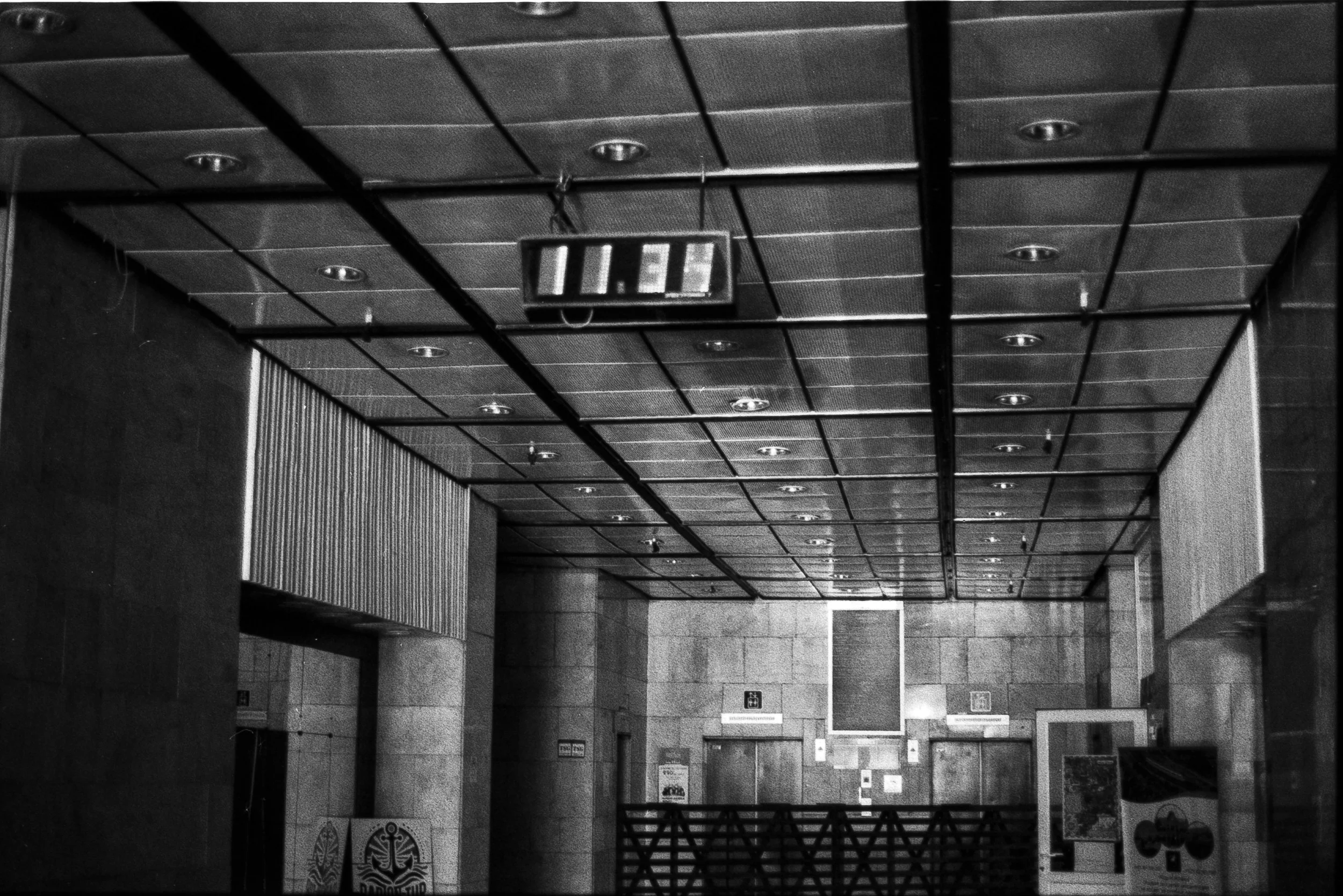
Olympus OM2N | Inside the COSMOS Hotel lobby, facing the disused elevators.
She continues to explain the blossoming times of the past. Tourism was at an all-time high during the Soviet times. Tourists from across the other 14 republics vacationed in Moldova, choosing COSMOS due to its proximity to the train station and airport, just 11km away. Her statement about a booming time of tourists is not wrong, with data during that era showing occupancy rates reaching 90% during the summer times and 100% from September to November, according to statistics by Dumitru Rusu. After the dissolution of the USSR, tourist numbers fell drastically, and the COSMOS started plummeting back to earth.
The lady raised the topic of demolition, seeing that some architects and businessmen have eyed the building and the space for other purposes. “But how can they?! It will cost them millions, look at all this concrete,” she says. An undisputed factor for the hotel's survival is the reinforced concrete that stands between history and ruthless investors.
Commercialisation has become the very doom of the city. “Parasite” constructions of malls, casinos, and a disco have sprung up, architecturally contrasting to the façade of the brutal modernist, COSMOS. The lady now seems to be mourning over the better times. Before we leave, and after taking the photographs which she pleasantly allowed, she gives my mother and me a warning. She warns us about the dangers of Chisinau; it is no longer a safe place. “People are not as they used to be”. This is where I disagree. Moldovan hospitality is unbeaten. I manage to feel safer in Moldova than I do now in London. However, at the same time, I see where her lack of humanity stems from.
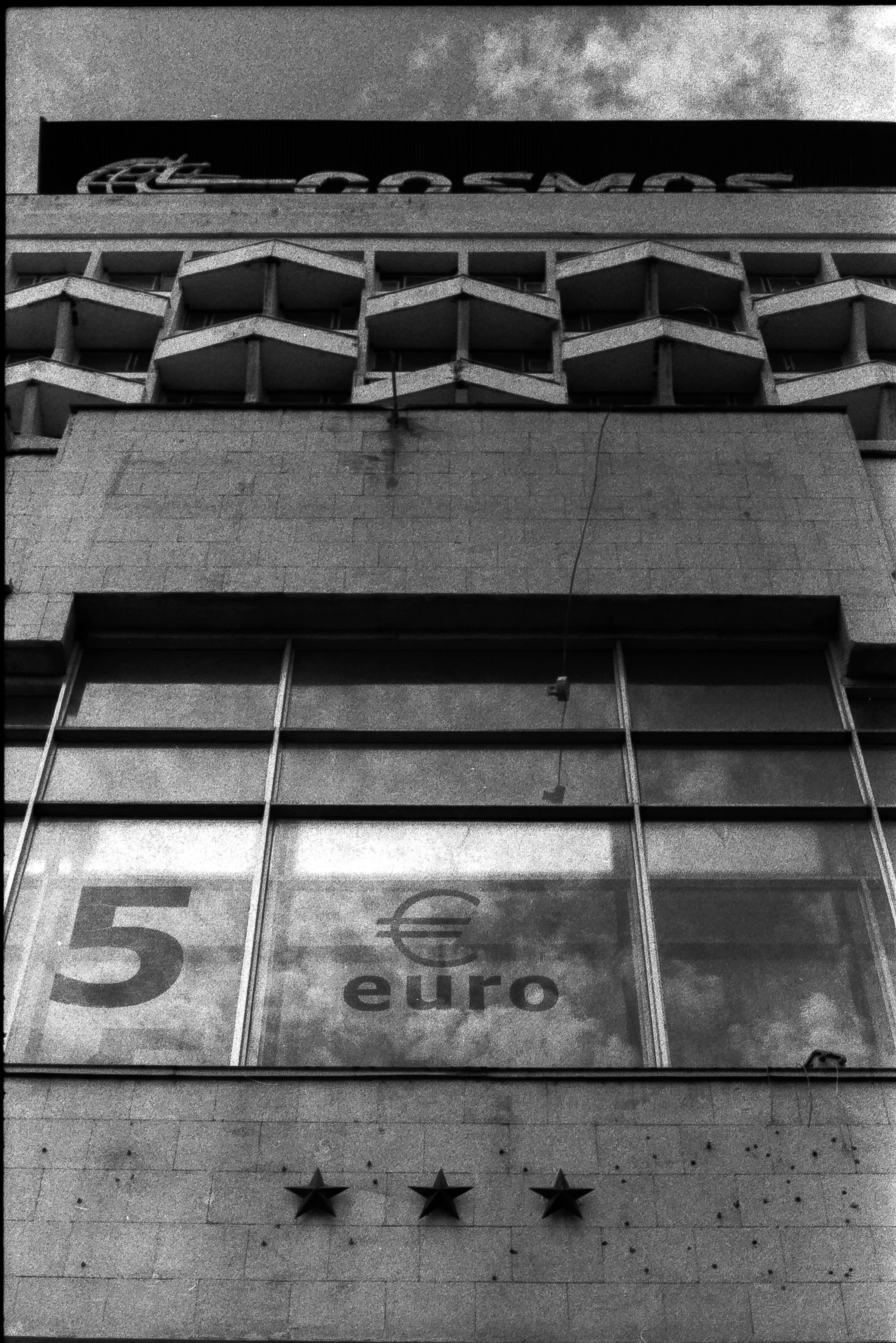
After researching the aftermath of the COSMOS falling from orbit, I found devastating theft. In 2007, the complex was sold to a company with foreign capital. This process ended with employees suffering forced unpaid leave, the denial of dividends, and the loss of their job positions. The employees of the hotel ‘Cosmos’ were led to believe they owned 25% of the company. This scheme is a notorious product of privatization that undermines employees for the personal interests of others. I cannot help but feel bad for the kind lady sitting behind the desk in the lobby, who had lost faith in her job and possibly the system. The COSMOS orbit has crashed landed…
I shot with a Rolleiflex T2 using Gold 200, paired with an Olympus OM2N utilizing AFG 400.
Location of the COSMOS Hotel:
a cinematic quest part 1
an exploration into the alternative options, for panoramic frames shot on film, when xpan isn't an option.
I grew up lovin’ the movies, and the cinema. A broad sentence most of us agrees with. To this day, some of my fondest memories of my childhood, involves movies and the feelings they projected upon me. I traveled far into my adulthood, before I finally picked up a camera, as a serious hobby. With my new “obsession”, I started to realize, that it was possible to recall some of the same feelings I had as a child, and it didn’t even have to involve moving pictures. With magic and a special ratio, I would turn a still image into all the same feelings, as the ones I received from movies. For me it felt like a secret set of cheat codes, the code was 65:24. A lethal combination that turned my, usually boring compositions, into pure childhood nostalgia. All this was combined into a single tool, a tool called XPan.

a quick introduction:
The XPan is an extremely unique rangefinder camera, that hit the market back in 1998. It combined all the advantages of the 35mm format, with the possibility of switching between regular 35mm images, and stunning panoramic stills in the format of 65:24. A camera of perfection, in my eyes. A marvelous wonder, made in a collision with two of the markets biggest giants at the time. The Swedish Hasselblad and Japanese Fujifilm. The camera was also branded under the Fuji name as TX1, and not XPan.
This rare beauty stands as my end camera.
With a big emphasis on end camera, as of now it’s just a unicorn in the sky, a mirage on the horizon. The current price, as I am writing this post, and the only listing, at my local go-to market for used cameras is 50.000DKK including a 45mm and a 90mm lens, equivalent to roughly €6700.

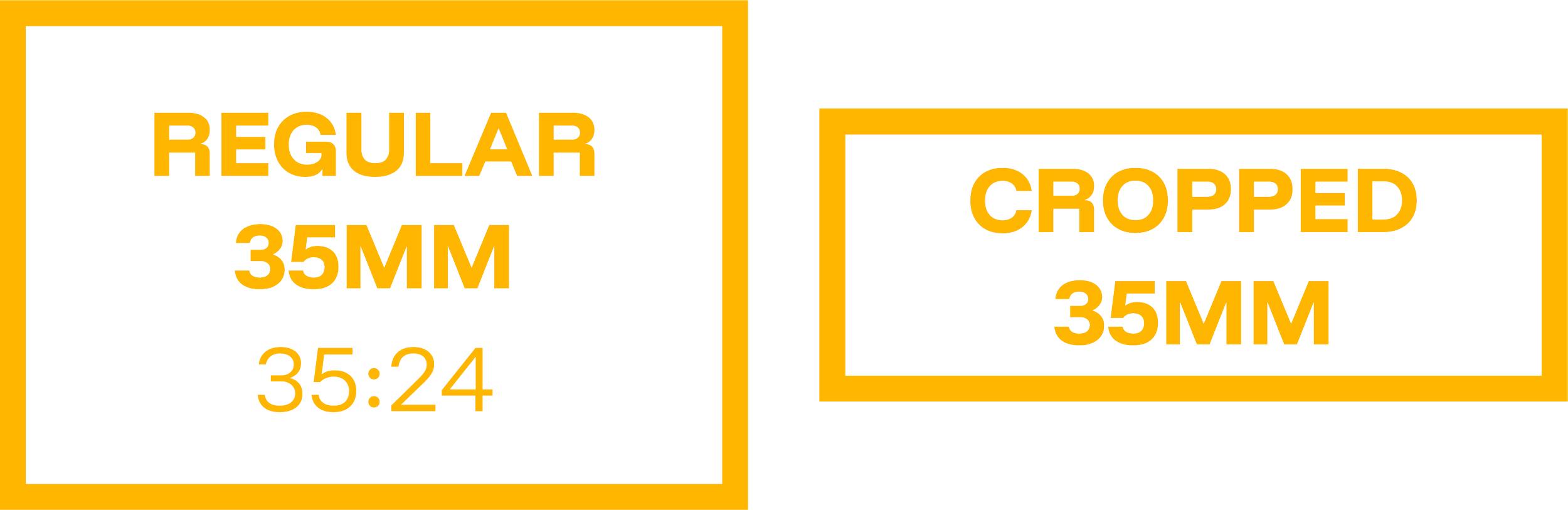
a comparison of a regular 35mm frame, next to the panoramic format of the XPan
So let’s say buying the XPan is plan A. If you can afford plan A, look no further. But if plan A isn't an option, let’s take a look at the other options out there. Let’s look for a plan B or C.
Let’s start with plan B.
The first and absolutely the easiest + cheapest option is simply to crop your regular 35mm, and this can be managed with two different approaches. Buy a camera that allows you to crop your standard 35mm frame into a panoramic, or use the 35mm camera you already own, and crop your frame in-post. There are pros and cons with both approaches, and it mainly comes down to what workflow works best for you. If you choose to get a camera that crops in-camera, you have the pleasent joy of seeing your crop through the viewfinder, and therefore are able to compose your shot, with the crop in mind. On the other hand by cropping in-camera, you end up “wasting” a lot of space on your negatives. If you choose to crop in-post, you have the possibility to expose the whole area of your negatives, and then see if you like a specific crop, or if it needs to change a bit.
Below are some examples of me cropping in-post. These were all shot on my Canon A1, and cropped afterwards in Adobe Lightroom.
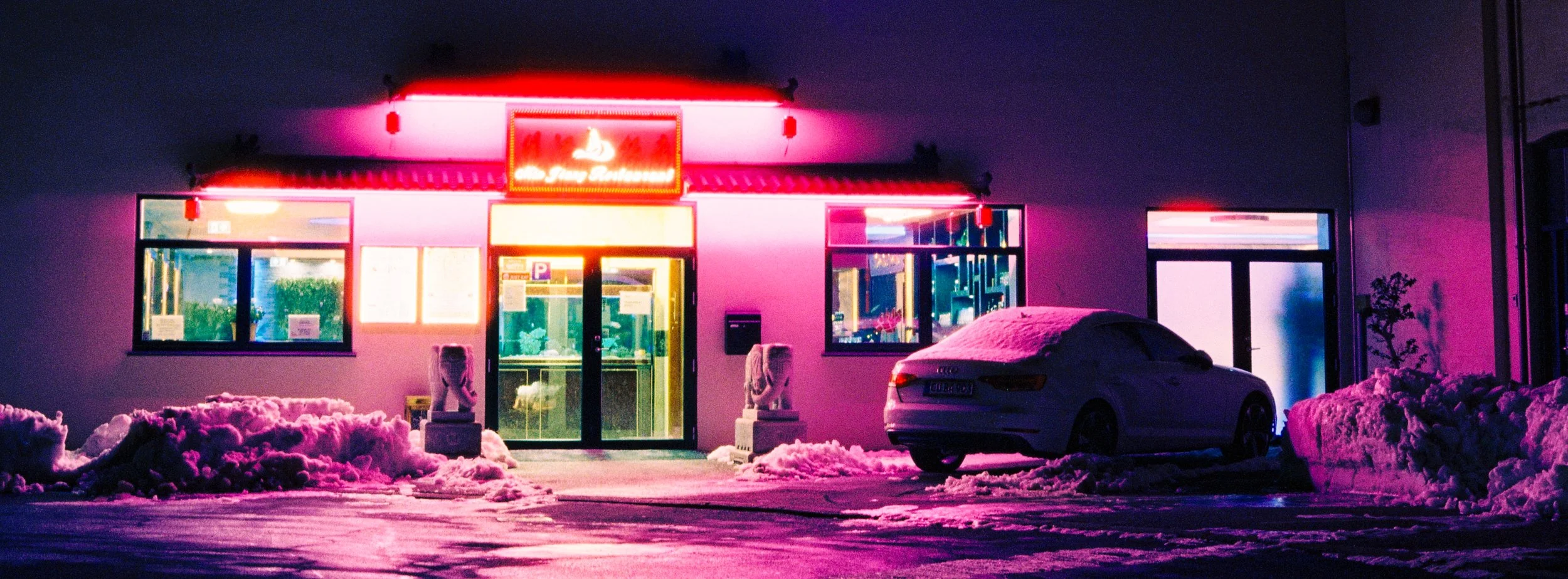
Chinese restaurant located in the western part of Aalborg shot on 800t
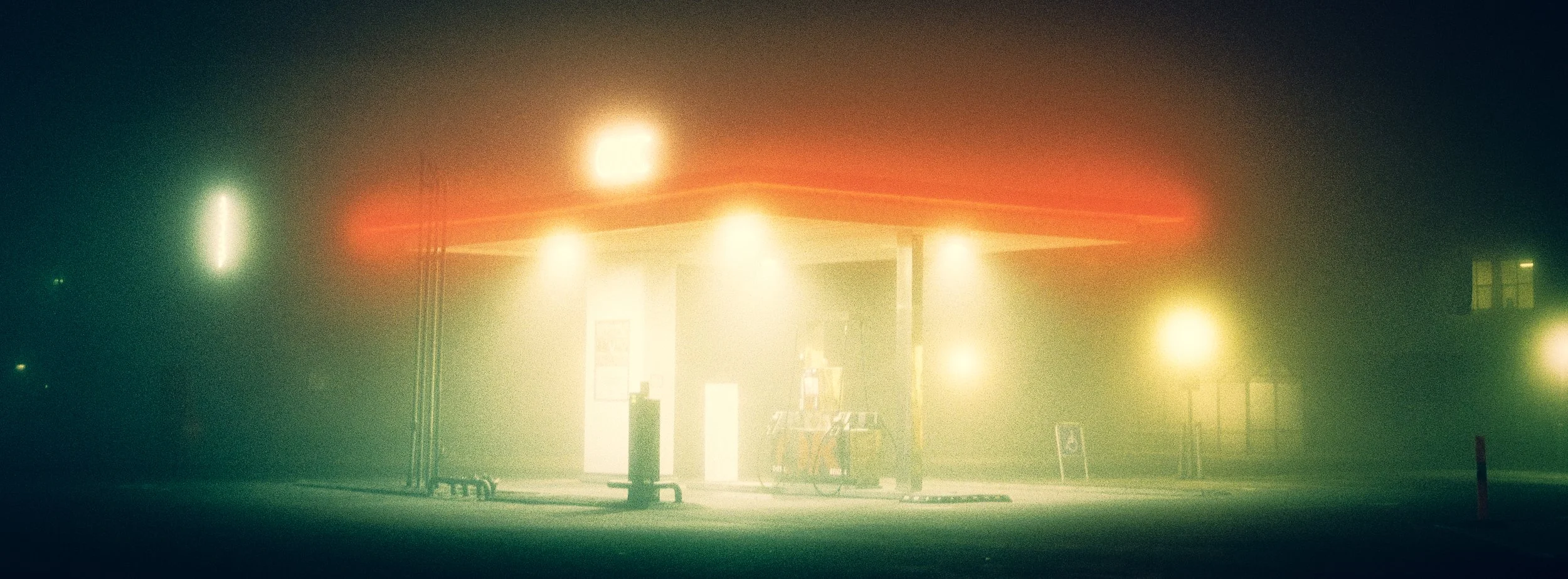
foggy gas station in Aalborg shot on 800t
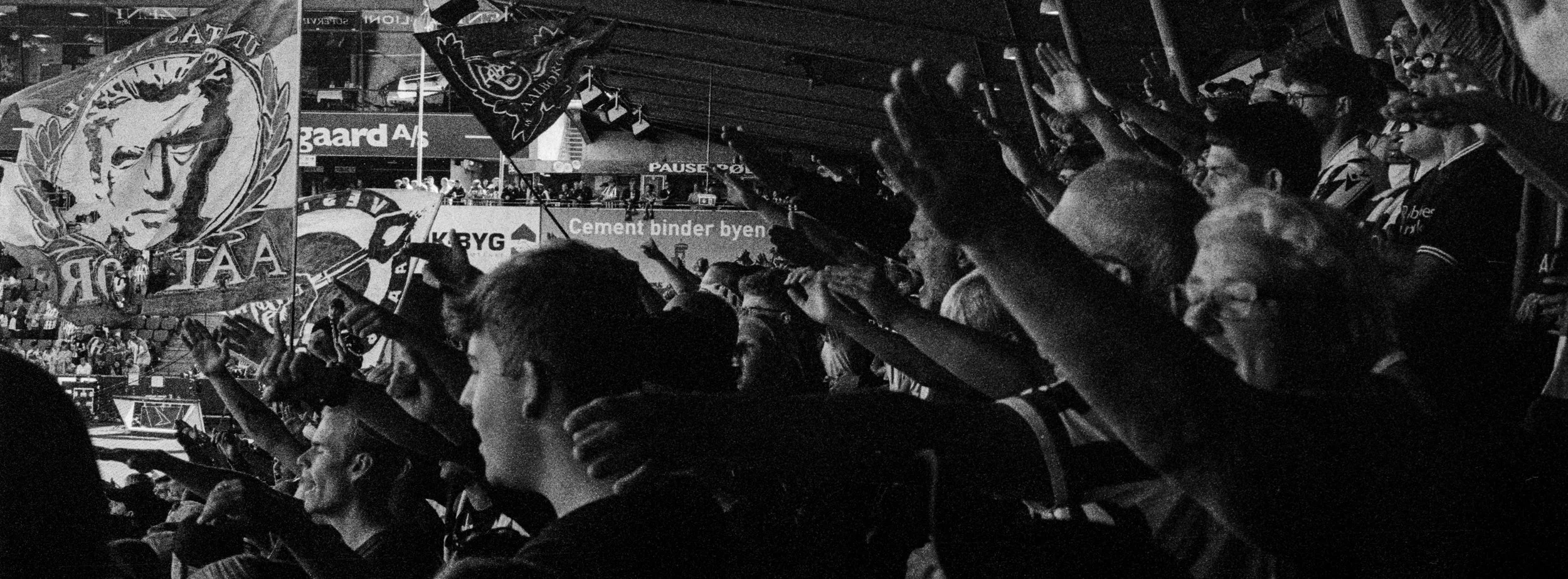
football match at the local stadium, shot on tmax 3200
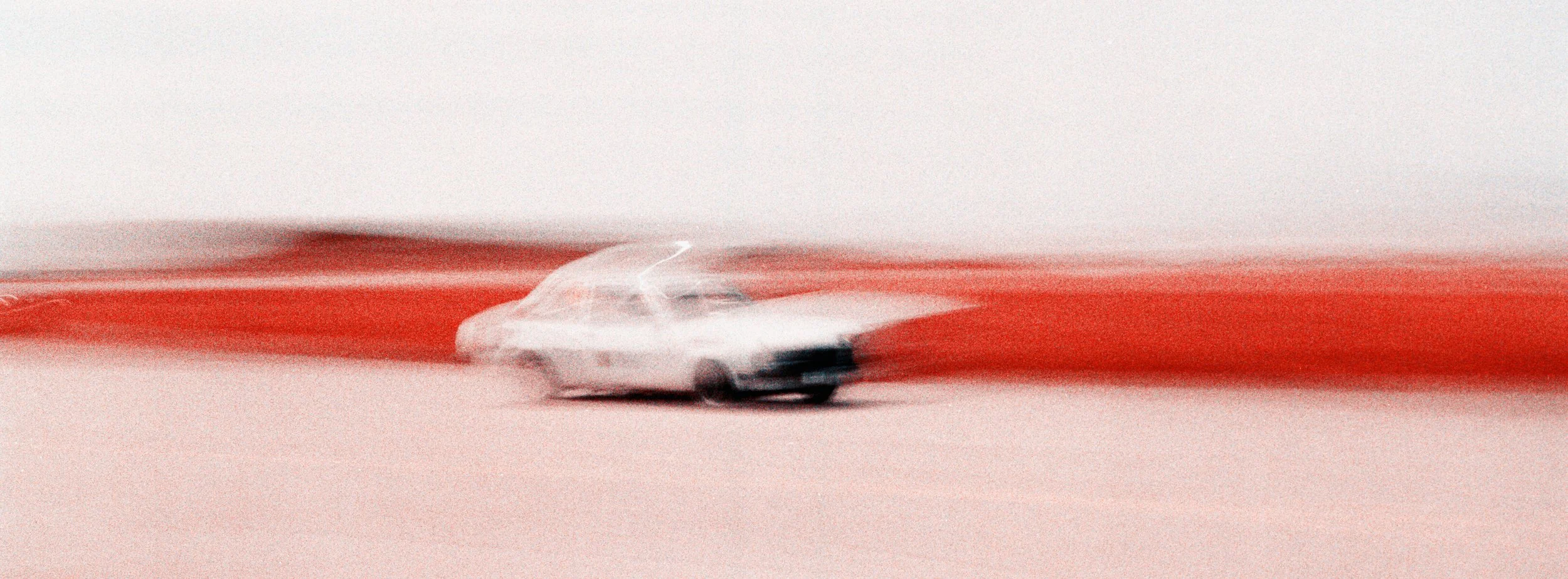
the Danish championship in rally sprint at Aalborg's airport shot on very expired gold 200
Cropping in-post definitely makes it easy to turn “regular” shots into small interesting masterpieces, but it also feels a little bit wrong, if wrong is even the correct term to use. It feels incomplete. For me seeing the crop through the viewfinder, while I’m composing the shot, holds enough value to have an impact on the end result. Even though this kinda restricts me in terms of which camera I can use when shooting, if I want the panoramic crop. Below are some frames shot on my Pentax Espio 115 (a camera that sadly died during my Sweden trip this summer). It allows me to crop the shot in-camera.
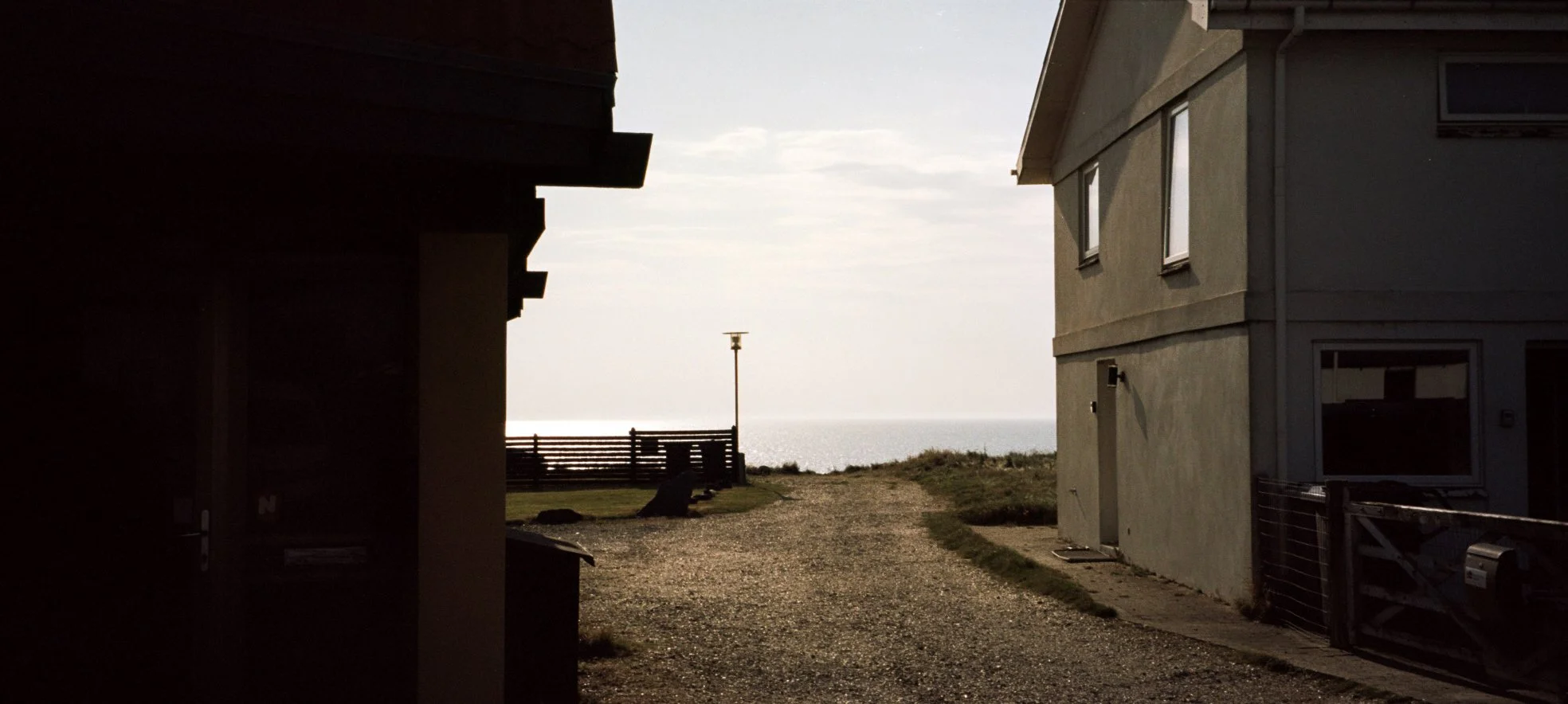
a view between houses, Nr. Lyngby shot on ultramax 400
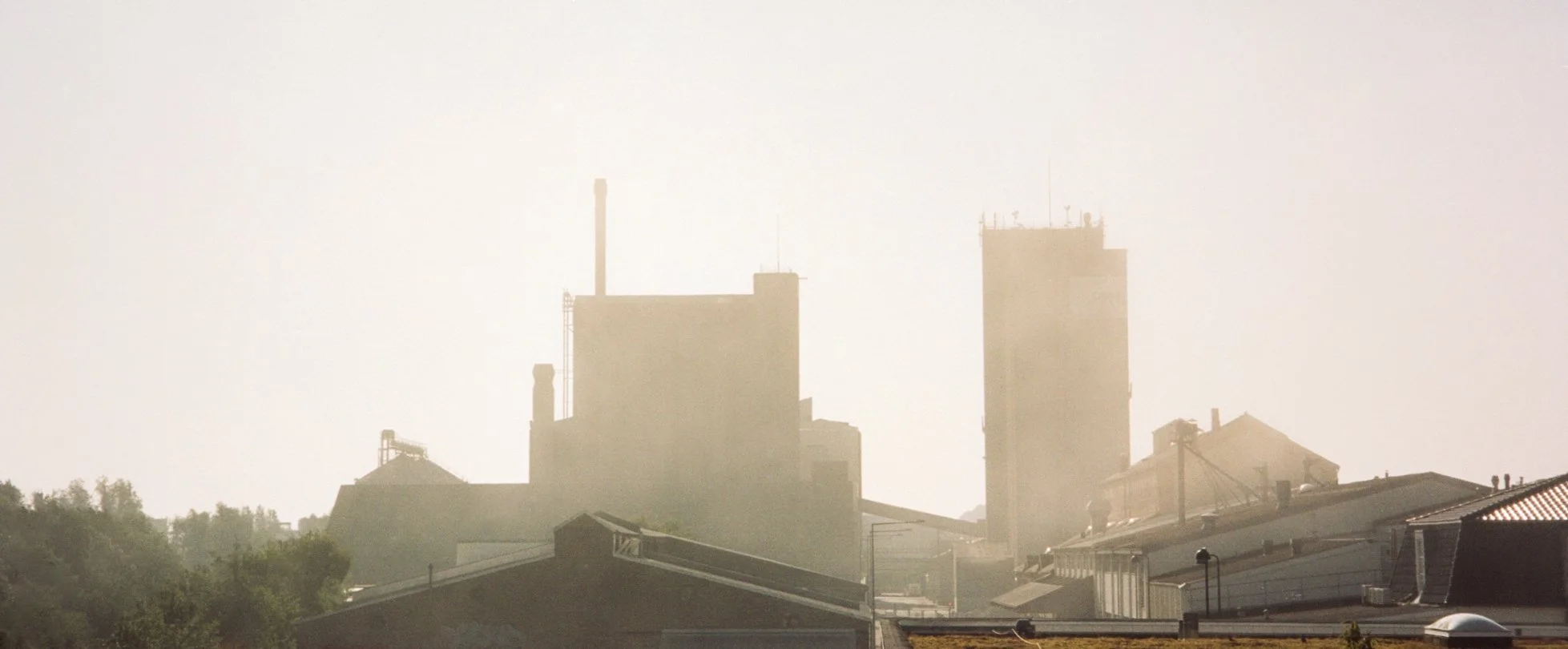
morning haze in Nørresundby, shot on gold 200
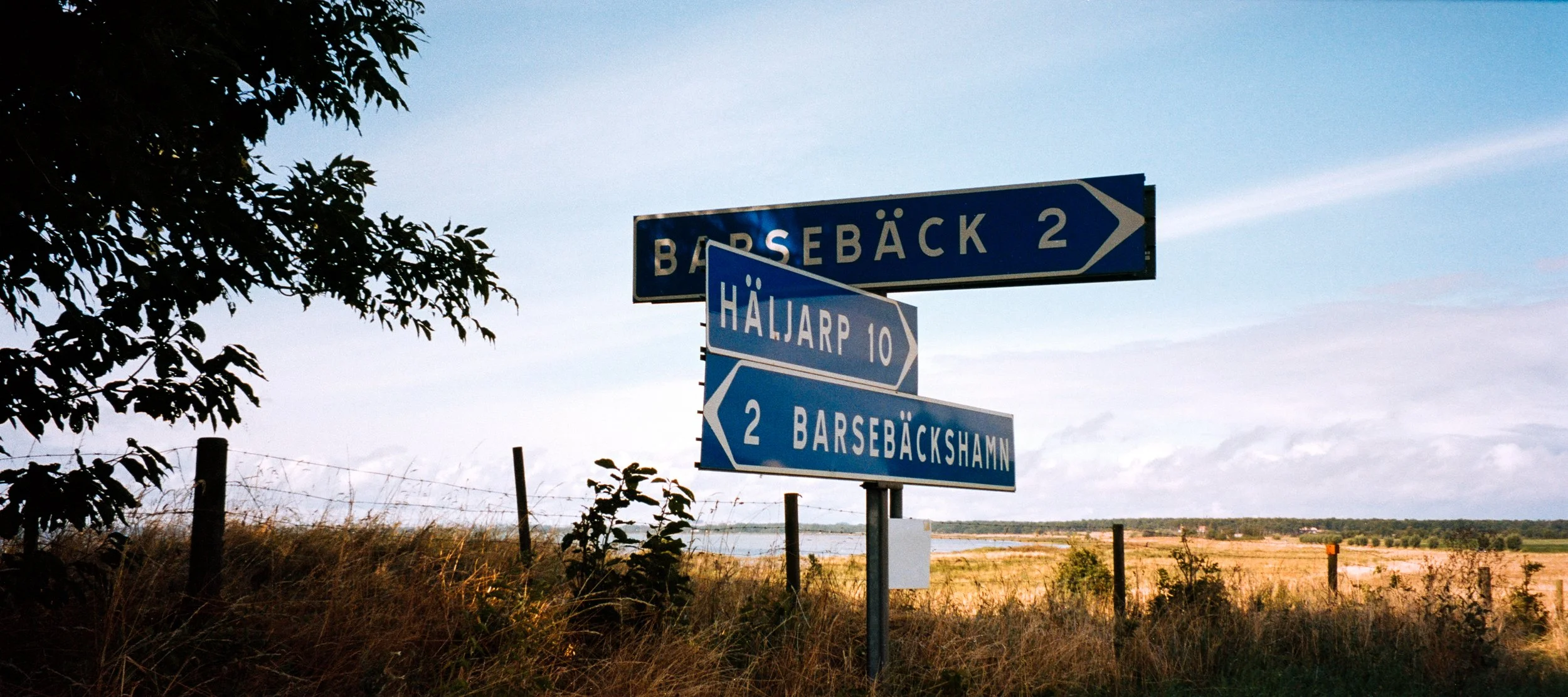
on my way to Barsebäck nuclear powerplant - Sweden, shot on 400D
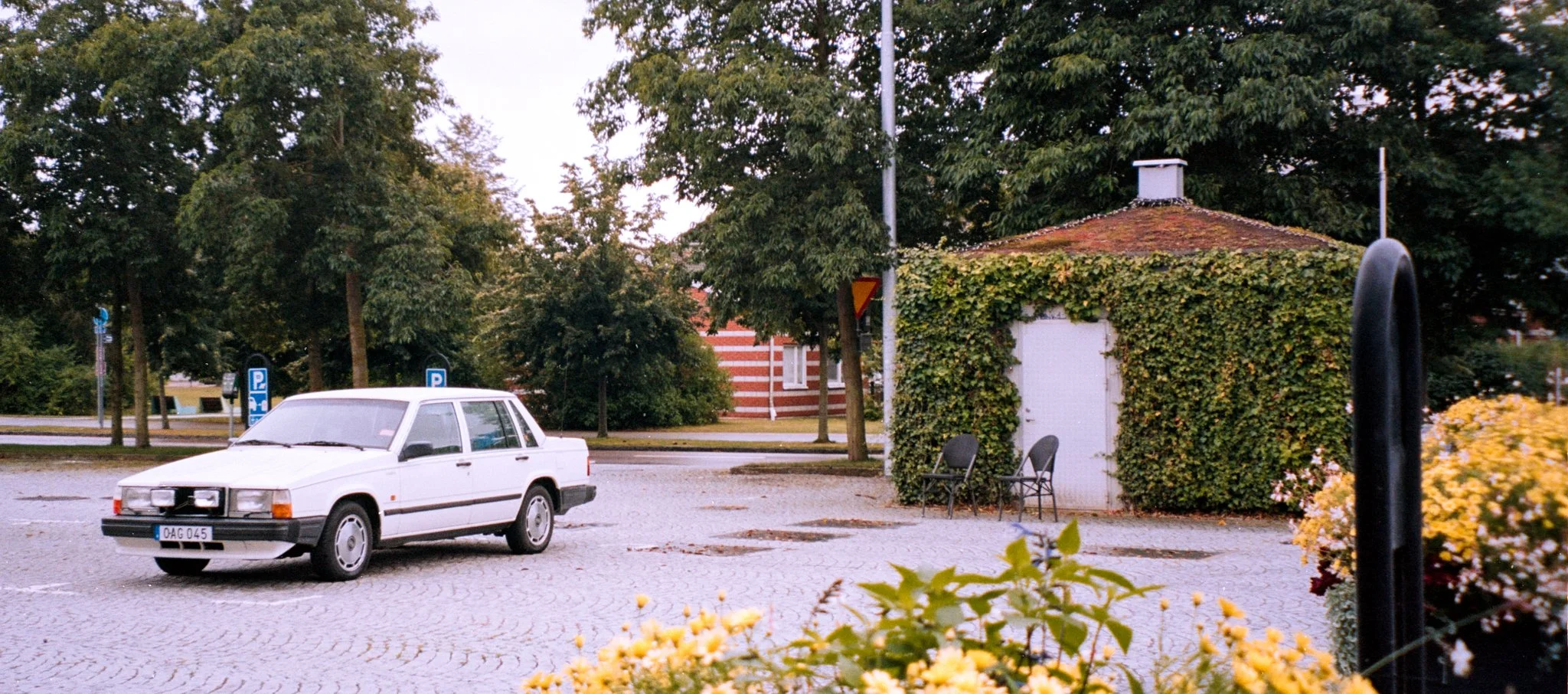
a scene in Lomma - Sweden, shot on portra 160
So if plan A, the expensive solution, and plan B, the easiest solution, doesn’t suit you - you can always opt for plan C. A dive into the forgotten format of APS film.
Let’s start with a small introduction to the world of APS film:
APS or Advanced Photo System, was first introduced to the consumer marked in 1996, and then discontinued in 2011 with Fuji and Kodak being the last two manufactores. It was a common opinion, spred across different manufacturers, that the standard 35mm format - was too difficult, for the regular consumer. I wrote a small blog about the forgotten format already, and it can be read on my personal blog friskluft.eu
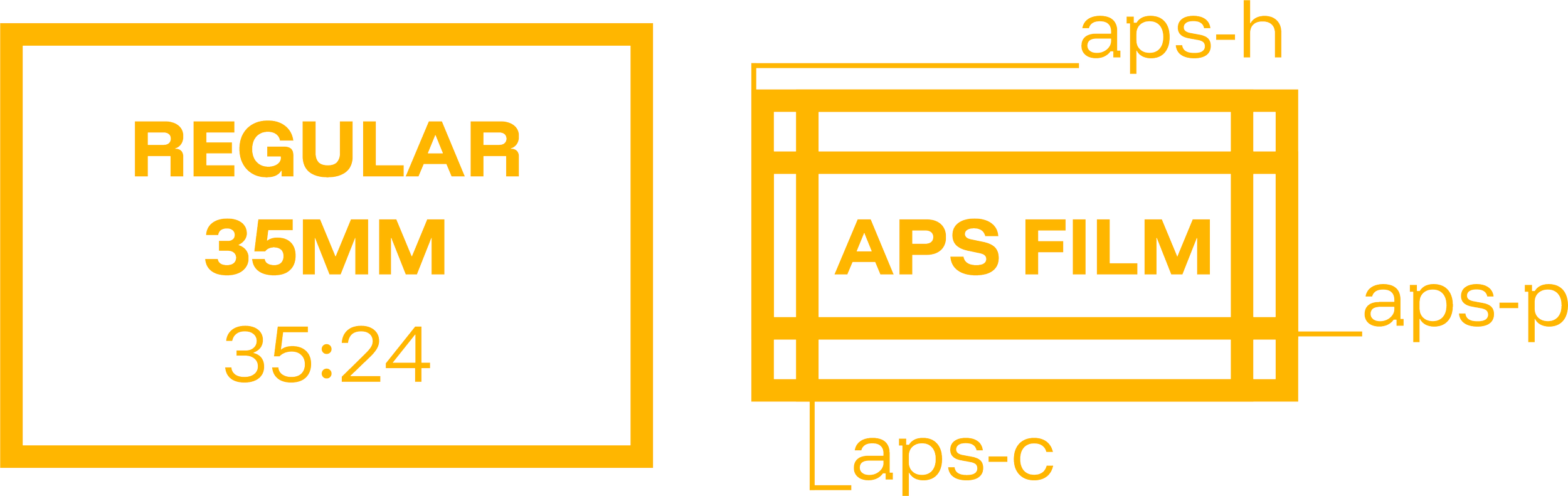
The APS film format is smaller than regular 35mm, and it came with the option to switch between three different ratios. The APS-H (High definition) with an aspect ratio of 16:9, APS-C (Classic) Aspect ratio 3:2 and APS-P (Panorama) 3:1. The “pano” crop was the whole reason I looked into this forgotten format, the hunt for a “cheaper” solution for panorama shots. With the film stock discontinued, and every roll still left - long expired, the cheap solution part went straight out of the window. The rolls are getting harder to come by, and unless you have one of the few camera models, that lets you change the iso manually - the shooting experience is tricky. I have only gotten decent results by overexposing the film, with at least two stops.
Here are some examples of the panoramic aspect ratio of APS-film:
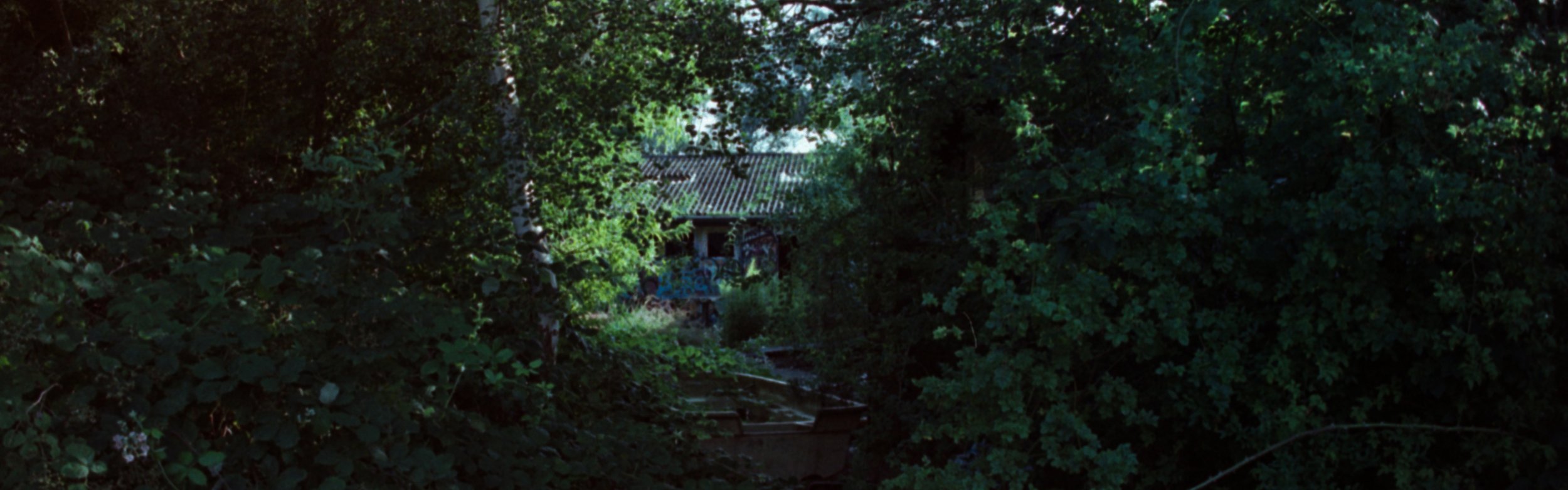
an abandoned warehouse on the waterfront in Nørresundby, shot on nexia 400
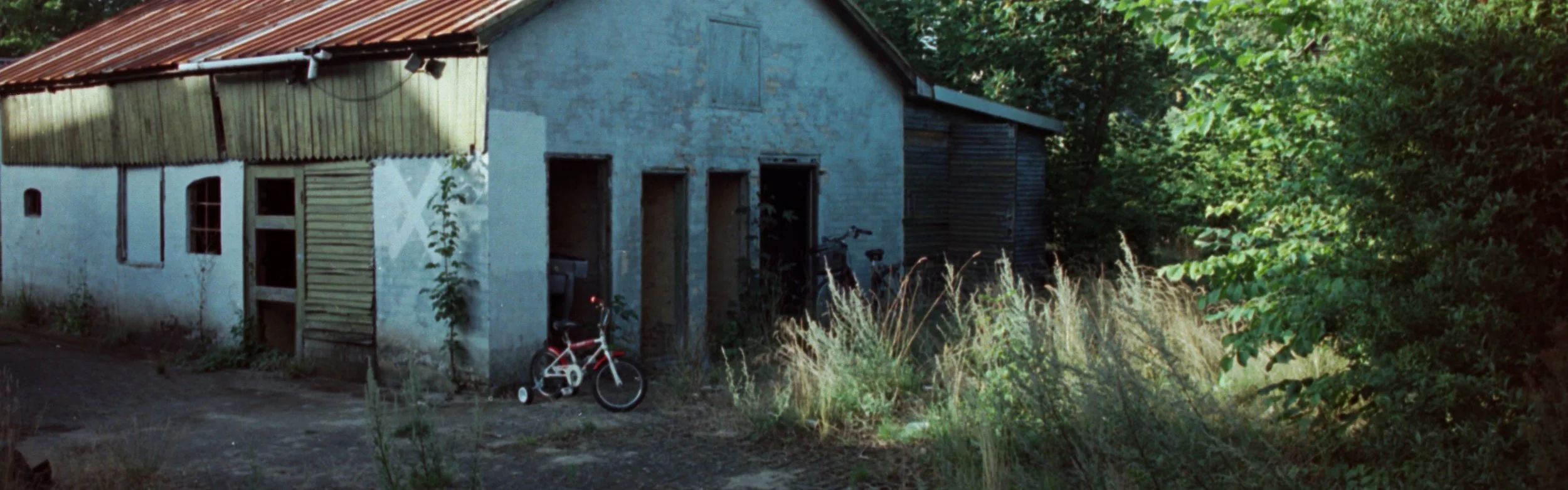
abandoned shed in Nørresundby, shot on nexia 400
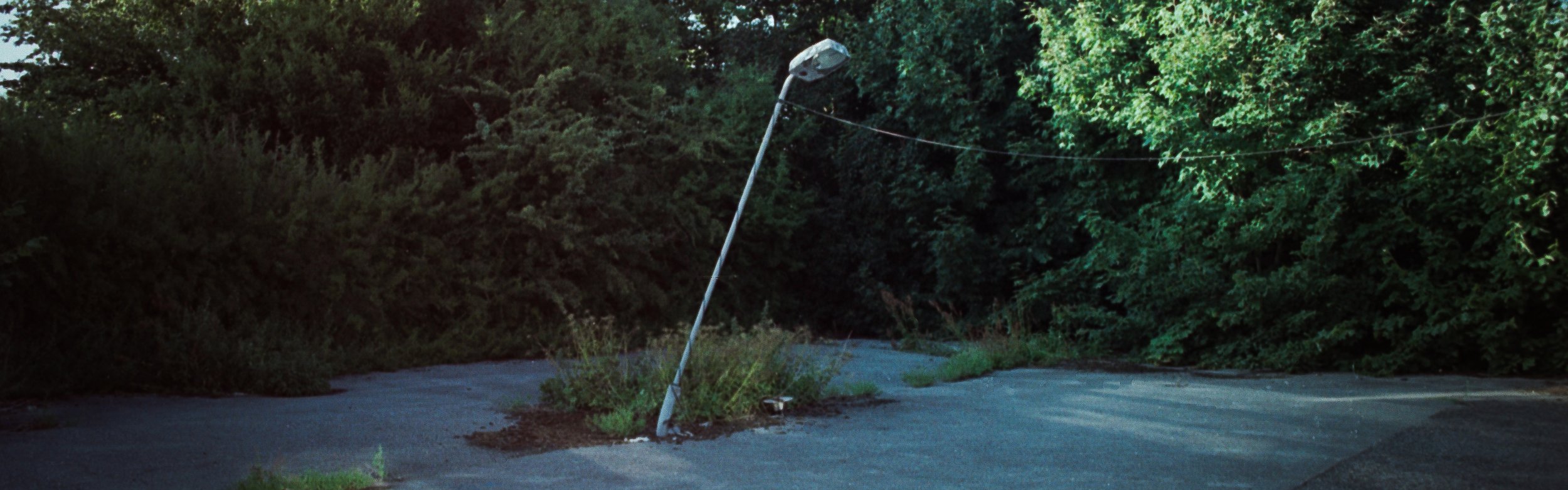
crooked lightpole, nexia 400
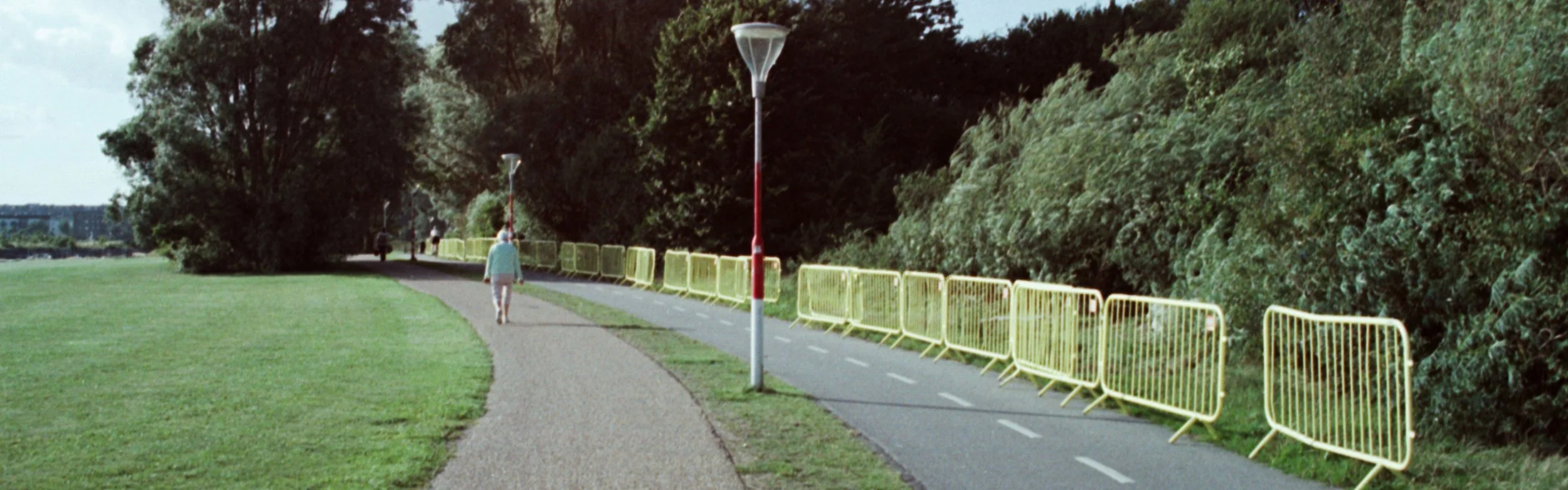
along the waterfront in Nørresundby, shot on nexia 400
My own experience with APS, has been fairly short - and the two cameras I currently own for the format, doesn't offer me the opportunity to change the iso when shooting. Along with the headache of finding decently priced APS rolls + not being able to scan the film at home, makes this format a tricky option for cheaper cinematic shots.
For now my own favourite option, is a camera that allows me to crop regular 35mm in-camera. One thing I haven’t played around with yet, is plan D. Modifying a 120mm camera, to shoot panoramic frames by masking/cropping the rest of the negatives. Or even shoot 35mm in a 120mm modified camera, so I get full 35mm panoramic negatives with sprocket holes. I am sure that this is another rabbit hole to fall into, for a future blog post.
Blog Post Title Three
It all begins with an idea.
It all begins with an idea. Maybe you want to launch a business. Maybe you want to turn a hobby into something more. Or maybe you have a creative project to share with the world. Whatever it is, the way you tell your story online can make all the difference.
Don’t worry about sounding professional. Sound like you. There are over 1.5 billion websites out there, but your story is what’s going to separate this one from the rest. If you read the words back and don’t hear your own voice in your head, that’s a good sign you still have more work to do.
Be clear, be confident and don’t overthink it. The beauty of your story is that it’s going to continue to evolve and your site can evolve with it. Your goal should be to make it feel right for right now. Later will take care of itself. It always does.
Blog Post Title Four
It all begins with an idea.
It all begins with an idea. Maybe you want to launch a business. Maybe you want to turn a hobby into something more. Or maybe you have a creative project to share with the world. Whatever it is, the way you tell your story online can make all the difference.
Don’t worry about sounding professional. Sound like you. There are over 1.5 billion websites out there, but your story is what’s going to separate this one from the rest. If you read the words back and don’t hear your own voice in your head, that’s a good sign you still have more work to do.
Be clear, be confident and don’t overthink it. The beauty of your story is that it’s going to continue to evolve and your site can evolve with it. Your goal should be to make it feel right for right now. Later will take care of itself. It always does.
-
![]()
Dream it.
-
![]()
Build it.
-
![]()
Grow it.
-
![]()
Sell it.